

 Free Demo
 917 Kundenrezensionen

Die Wichtigkeit und Schwierigkeit der Anthropic CCAR-F ist weltweit bekannt, und mit der internationalen Zertifizierung der CCAR-F macht Ihre Jobsuche in der IT-Branche sicherlich leichter. Deshalb streben wir danach, Ihnen besten Hilfe zu bieten, um Anthropic CCAR-F zu bestehen.

Extra Kundendienst für CCAR-F
Unser Unternehmen ist sehr bekannt für Ihr großes Verantwortungsbewusstsein. Nachdem Sie für CCAR-F bezahlt haben, bieten wir Ihnen weiterer Kundendienst. Um die neueste Tendenz der Prüfung zu folgen, aktualisieren wir die Anthropic CCAR-F rechtzeitig. Danach schicken wir Ihnen die neueste Version der Prüfungsunterlagen per E-Mail automatisch. Der Aktualisierungsdienst der CCAR-F ist innerhalb einem Jahr nach Ihrem Kauf ganz gratis.
Wir sind verantwortlich für die Wirksamkeit der Anthropic CCAR-F. Falls Sie mit Hilfe von CCAR-F noch leider nicht die Prüfung bestehen. Schicken Sie bitte das Zeugnis! Wir werden nach der Bestätigung Ihnen die volle Rückerstattung geben so schnell wie möglich. Wir sind kompetenter und hilfsreicher Partner für Sie. Sie können sich unbesorgt auf uns verlassen!
Einfach und bequem zu kaufen: Um Ihren Kauf abzuschließen, gibt es zuvor nur ein paar Schritte. Nachdem Sie unser Produkt per E-mail empfangen, herunterladen Sie die Anhänge darin, danach beginnen Sie, fleißig und konzentriert zu lernen!
Die besten Hilfe der CCAR-F einfach benutzen
Möchten Sie jetzt die zuverlässige Anthropic CCAR-F besitzen? Sie können jetzt einfach online durch CreditCards oder mit anderem gesicherten Zahlungsmittel bezahlen. Wenn die Bezahlensinformationen bestätigt werden, schicken wir umgehend Ihnen CCAR-F per E-Mail. Sie können sofort die Anthropic CCAR-F genießen!
Simulierte Prüfung der CCAR-F beseitigen Ihre Angststörung
Man sagt: Übung macht den Meister. Je mehr Prüfungsaufgaben der CCAR-F Sie geübt haben, desto mehr Angst vor Anthropic CCAR-F wird beseitigt. Daher haben wir für Sie die Simulations-Software der CCAR-F entwickelt. Sie können damit die Atmosphäre der Prüfung besser empfinden. Mit genügenden simulierten Prüfungen werden Sie sich mit der Anthropic CCAR-F auskennen und mehr Selbstbewusstsein daher bekommen.
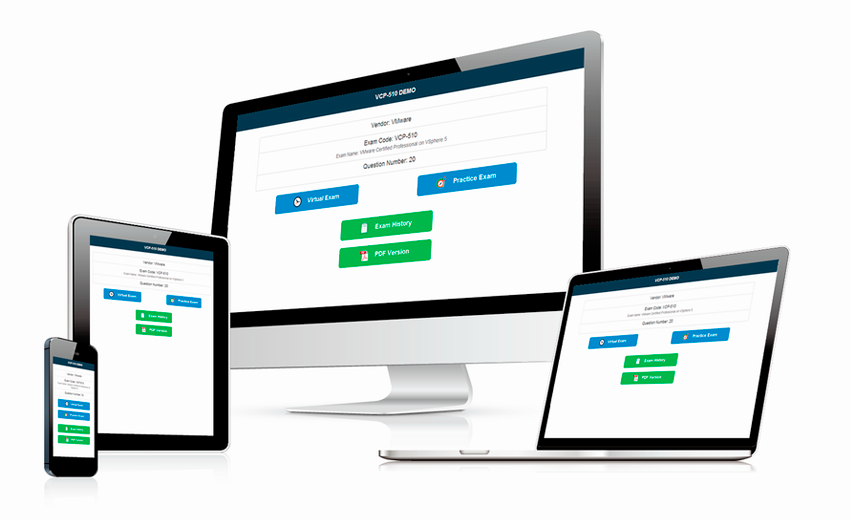
Neben den genannten Versionen der Anthropic CCAR-F bieten wir Ihnen noch Online Test Engine. Die kostenlose Demo aller drei Versionen können Sie auf unserer Webseite herunterladen und sofort probieren. Wir glauben, dass die hohen Standard erreichende Qualität der CCAR-F Ihre Erwartungen nicht enttäuschen werden. Allerdings erreicht die Prozentzahl von unseren Kunden, die schon Anthropic CCAR-F bestanden haben, eine Höhe von 98%-100%.
Bessere Fachkenntnisse über CCAR-F schnell beherrschen
Die Anthropic CCAR-F von uns enthält eine große Menge von neuesten Prüfungsunterlagen, die von unsere IT-Gruppe forgfältig analysiert werden. Fast jeder Frage in CCAR-F folgen ausführliche Erläutungen der Antworten. Mit der PDF Version der Prüfungsunterlagen können Sie irgenwo und irgendwann mit der Anthropic CCAR-F wiederholen. Auf diese Weise werden Sie die Fachkenntnisse schnell beherrschen ohne Zeitaufschwendung.
Anthropic CCAR-F Prüfungsthemen:
| Abschnitt | Gewichtung | Ziele |
|---|---|---|
| Claude Code Konfiguration & Workflows | 20% | - Claude Code
|
| Kontextmanagement & Zuverlässigkeit | 15% | - Kontexthandhabung
|
| Tool-Design & MCP-Integration | 18% | - Tool-Integration
|
| Prompt-Engineering & Strukturierte Ausgabe | 20% | - Prompt-Design
|
| Agentenbasierte Architektur & Orchestrierung | 27% | - Agentenbasierte Architekturmuster
|
Anthropic Claude Certified Architect - Foundations CCAR-F Prüfungsfragen mit Lösungen
Frage #1
You are using Claude Code to accelerate software development. Your team uses it for code generation, refactoring, debugging, and documentation. You need to integrate it into your development workflow with custom slash commands, CLAUDE.md configurations, and understand when to use plan mode vs direct execution.
Your team wants Claude to follow a detailed code review checklist (8 items covering API changes, test coverage, documentation, security, etc.) when reviewing pull requests. The team also uses Claude extensively for other tasks: writing new features, debugging production issues, and generating documentation. Currently, developers paste the checklist at the start of each review session. Which approach best addresses this workflow need?
A. Configure plan mode as the default for code review sessions.
B. Add the checklist to the project's CLAUDE.md file under a "Code Review" section.
C. Create a /review slash command containing the checklist, invoked when starting reviews.
D. Create a dedicated review subagent with the checklist embedded in its configuration.
Frage #2
You are building developer productivity tools using the Claude Agent SDK. The agent helps engineers explore unfamiliar codebases, understand legacy systems, generate boilerplate code, and automate repetitive tasks. It uses the built-in tools (Read, Write, Bash, Grep, Glob) and integrates with Model Context Protocol (MCP) servers.
Your agent has spent 25 minutes exploring a game engine's rendering subsystem -reading shader code, buffer management, and frame synchronization logic. An engineer now asks it to understand how the physics engine integrates with rendering for collision debug overlays. You notice recent responses reference "typical rendering patterns" rather than the specific VulkanPipeline and FrameGraph classes it discovered earlier.
What's the most effective approach?
A. Use /clear to reset context completely, then start fresh with physics exploration using file paths from the project's CLAUDE.md.
B. Spawn a sub-agent to explore physics independently, then manually synthesize its findings with the rendering knowledge accumulated in the main conversation.
C. Continue in the current context with more targeted prompts referencing the specific classes by name.
D. Summarize key rendering findings, then spawn a sub-agent for physics exploration with that summary in its initial context.
Frage #3
Your control_device tool manages smart home devices through external APIs. When a device doesn't respond within the timeout period, the tool returns an error. Production logs show that the agent simply tells users "the device is not responding" without offering helpful next steps. Which error response structure would best enable the agent to provide useful follow-up?
A. Set is_error: true with a brief "Device offline" message and provide a separate tool the agent can call to retrieve context-specific troubleshooting suggestions.
B. Set is_error: true with a message explaining the likely cause and suggesting troubleshooting steps the agent can offer the user.
C. Set is_error: false with an optimistic message indicating the command was dispatched successfully but device acknowledgment is still pending.
D. Set is_error: true with a structured technical error containing the device ID, timeout duration, and raw API response code for debugging purposes.
Frage #4
You are building a structured data extraction system using Claude. The system extracts information from unstructured documents, validates the output using JavaScript Object Notation (JSON) schemas, and maintains high accuracy. It must handle edge cases gracefully and integrate with downstream systems.
Monitoring shows 12% of extractions fail Pydantic validation with specific errors like "expected float for quantity, got `2 to 3'". Retrying these requests without modification produces identical failures.
What's the most effective approach to recover from these validation failures?
A. Implement a secondary pipeline using a larger model tier to reprocess documents that fail validation.
B. Send a follow-up request including the validation error, asking the model to correct its output.
C. Set temperature to 0 to eliminate output variability and ensure consistent formatting.
D. Pre-process source documents to standardize problematic formats before sending them for extraction.
Frage #5
You are building a multi-agent research system using the Claude Agent SDK. A coordinator agent delegates to specialized subagents: one searches the web, one analyzes documents, one synthesizes findings, and one generates reports. The system researches topics and produces comprehensive, cited reports.
When analyzing complex legal cases that cite multiple precedents, the document analysis subagent processes each sequentially. A landmark case citing 12 precedents takes over 3 minutes to analyze completely. What's the most effective way to reduce this latency while preserving the coordinator's ability to monitor and debug the system?
A. Create a recursive agent hierarchy where analysis agents subdivide work among child agents until reaching single-precedent granularity
B. Have the coordinator spawn parallel document analysis subagents, each handling a subset of precedents, then aggregate results before synthesis
C. Implement a message queue where precedent analysis tasks are processed asynchronously by a pool of worker agents
D. Enable the document analysis subagent to spawn its own specialized subagents dynamically when it encounters cases with many citations
Fragen und Antworten:
| Frage #1 Antwort: C | Frage #2 Antwort: D | Frage #3 Antwort: B | Frage #4 Antwort: B | Frage #5 Antwort: B |













Reger -
Ich bin ihhen dankbar. Ohne ihr kann ich meine CCAR-F Prüfung nicht bestehen. ExamFragen ist der beste Studienpartner. Ich bin sicher, dass andere Kandidaten die Prüfung mühlos bestehen können, solange sie die Studienmaterialien aus ExamFragen benutzen.